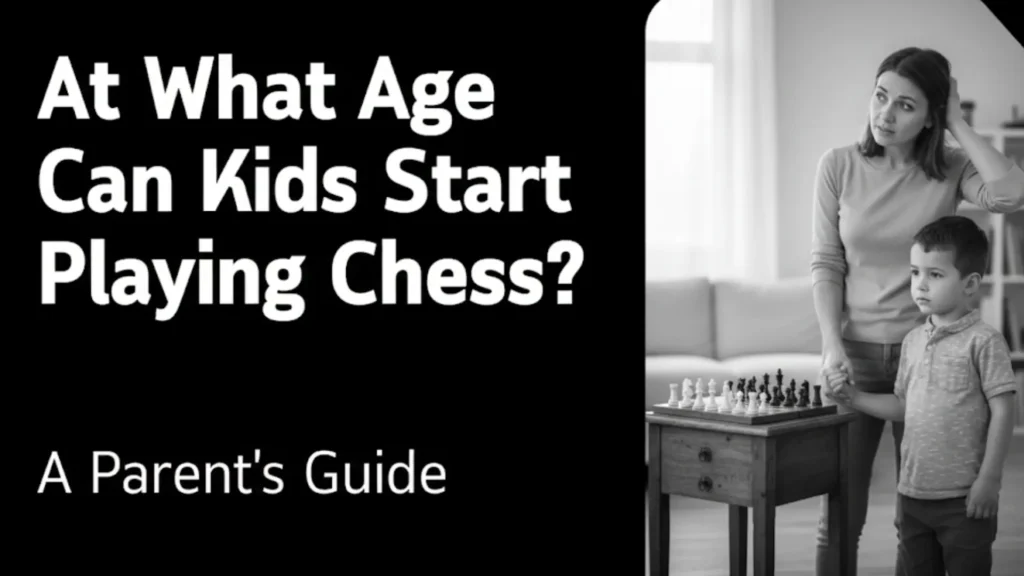
“Is my child too young for chess?”
This is one of the most common questions I hear from parents during our enrollment conversations. I completely understand your concern. You want to introduce your child to activities at the right time, when they can actually benefit and enjoy them.
Let me share what I’ve learned after teaching hundreds of children over the past 7+ years.
The Short Answer: As Early as 3-4 Years Old
Yes, you read that right! Children can start learning chess as young as 3 to 4 years old. But here’s the important part: it’s not about sitting them down for serious competitive games. At this age, chess is introduced through play, stories, and fun activities.
I’ve seen 4-year-olds light up when they learn that the knight “jumps like a horse” or that the rook “moves like a car on straight roads.” The key is making it age-appropriate and enjoyable.
The Sweet Spot: Ages 5-7
From my experience, most children are truly ready to grasp chess concepts between ages 5 and 7. At this stage, they can:
-
- Sit and focus for 20-30 minutes
-
- Understand basic rules and patterns
-
- Think one or two moves ahead
-
- Handle both winning and losing with guidance
I remember a parent who was hesitant about enrolling her 6-year-old son. “He’s so active, Coach. Can he really sit still for chess?” Three months later, she told me chess was the only activity where her son naturally practiced patience. That’s the magic of the game it meets children where they are and gently stretches their capabilities.
What About Older Beginners?
“My child is already 9. Have we missed the boat?”
Absolutely not! I regularly teach children who start at 8, 10, or even 12 years old. Older beginners often progress faster because their cognitive skills are more developed. They can understand strategies quicker and have better self-discipline.
There’s no “too late” in chess. I’ve had teenagers pick up the game and fall completely in love with it within weeks.
Signs Your Child Is Ready
Rather than focusing only on age, watch for these readiness signals:
Interest and Curiosity: Does your child show interest when they see chess pieces or chess being played? Curiosity is the best teacher.
Basic Attention Span: Can they focus on a puzzle or activity for at least 15-20 minutes? This shows they’re ready for structured learning.
Turn-Taking Ability: Can they wait for their turn in games? Chess requires patience and understanding that each player gets a chance.
Comfort with Rules: Do they enjoy games with rules, even simple ones? Chess has structure, and kids who appreciate this do well.
If your child shows most of these signs, they’re likely ready regardless of their exact age.
Why Start Young? The Real Benefits
You might wonder, “Why chess specifically, and why early?”
In my classes, I’ve watched chess transform children in beautiful ways:
Problem-Solving Becomes Natural: A 7-year-old student once told me, “Coach, chess taught me that every problem has more than one solution.” That’s critical thinking developing in real-time.
Patience and Focus: In our screen-dominated world, where you might notice your kids losing attention span to quick digital fixes, chess gives children a reason to slow down, think, and concentrate. Parents often tell me their children’s homework time improves after starting chess.
Confidence Building: There’s something powerful about a child planning a strategy and watching it work. That confidence spills into schoolwork, social situations, and other activities.
Emotional Resilience: Chess teaches children to handle both victory and defeat gracefully. They learn that losing is just a lesson for next time a life skill we all need.
How We Teach Different Age Groups
At our classes, we don’t use a one-size-fits-all approach:
Ages 3-5: We use storytelling, colorful boards, and play-based learning. Sessions are short (20-30 minutes) with lots of movement and fun.
Ages 6-8: We introduce proper rules gradually, mix in puzzles and mini-games, and keep the atmosphere encouraging and light.
Ages 9+: We dive deeper into strategy, tactics, and even light competition for those interested, while still maintaining the joy of learning.
Starting at Home vs. Structured Classes
Some parents ask, “Can I just teach them at home?”
Of course! Playing casually at home is wonderful. But here’s what structured online chess classes for kids offer:
-
- Age-appropriate curriculum designed by experienced coaches
-
- Peer learning where children play with others at their level
-
- Consistent progress tracking so you see actual development
-
- Expert correction of mistakes before they become habits
Think of it like learning to swim. You can splash around in the pool at home, but a coach teaches proper technique, safety, and progression. You can see our programs to understand how we structure these levels to match your child’s specific developmental stage
Your Next Step
If your child is between 4 and 12 years old and shows even a spark of interest in chess, you’re at the perfect moment to explore this.
The question isn’t really “Can my child play chess at this age?” but rather “How can we make chess an enriching part of my child’s growth?”z
I invite you to attend a trial class with your child. Watch how they interact with the game, see the teaching approach, and most importantly, observe if their eyes light up when they capture their first piece or solve their first puzzle.
Because ultimately, the best age for your child to start chess is when they’re curious, willing, and have a supportive parent like you ready to encourage them.
Let’s help your child discover the beautiful world of chess one move at a time.