
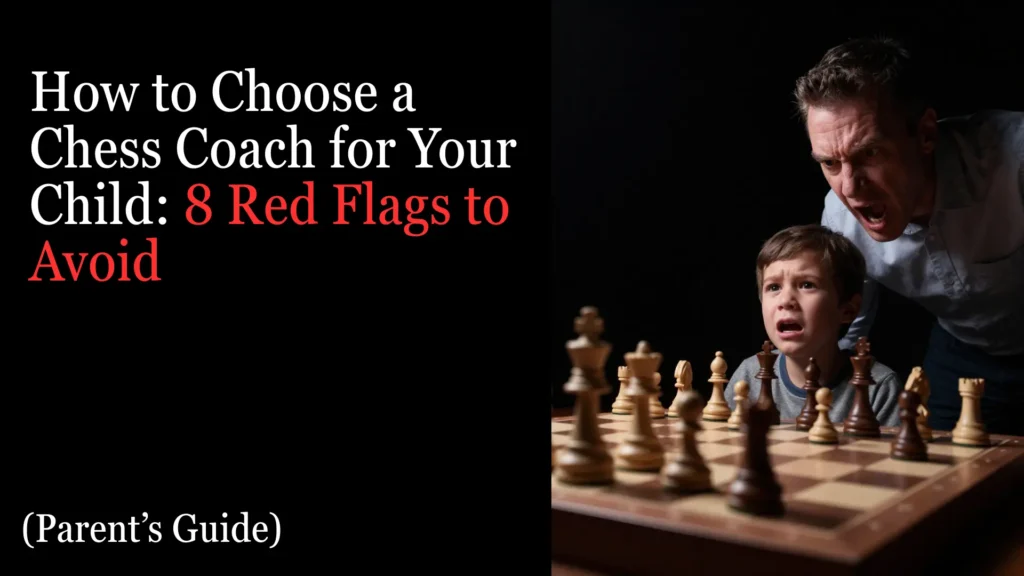
As a parent, choosing the right chess coach for your child is one of the most important decisions you'll make in their chess journey. I've seen countless parents come to me after unfortunate experiences with coaches who promised the world but delivered disappointment. Let me share the warning signs I wish every parent knew before enrolling their child.
1. The "Win at All Costs" Mentality
A coach who only celebrates victories and shows disappointment after losses is planting seeds of anxiety in your child. I remember a parent who came to me in tears. Her 8-year-old refused to play chess anymore because his previous coach would ignore him after tournament losses.
What to watch for: Does the coach discuss only ratings and wins? Good coaches celebrate effort, improvement, and learning from defeats. Chess is a lifelong journey, not just a race to the next rating milestone.
2. No Structured Curriculum
If a coach sits down and says, “So, what do you want to learn today?” to a beginner child, that’s a massive red flag. Children need structure, progression, and a clear roadmap.
Ask yourself: Can the coach explain their teaching methodology? Do they have a plan for the next 3-6 months? In my classes, parents receive a curriculum outline because transparency builds trust. If a coach can’t articulate their teaching plan, they probably don’t have one.
3. One-Size-Fits-All Teaching
Every child learns differently. Some are visual learners, others need hands-on practice. I’ve had parents tell me their previous coach taught the same opening to every student, regardless of playing style or understanding level.
Red flag alert: TThe coach uses identical lesson plans for all students or refuses to adapt when your child struggles with a concept. This is particularly problematic if they fail to adjust their delivery when kids losing attention span during a session. Great coaches are flexible, recognizing when to switch from theory to interactive play to keep a child engaged and meeting them where they are.
4. Poor Communication with Parents
You’re investing time and money in your child’s development. You deserve updates, feedback, and open communication. If a coach becomes defensive when you ask about progress or rarely provides feedback, something’s wrong.
What’s normal: Regular progress updates, openness to questions, and constructive discussions about your child’s strengths and areas for improvement. Transparency isn’t optional—it’s essential.
5. Unrealistic Promises
“Your child will become a master in one year!” “Guaranteed rating increase of 400 points!” These promises sound appealing, but they’re often empty.
Chess improvement depends on practice, natural aptitude, dedication, and time. Any coach making guarantees is either inexperienced or dishonest.
6. Lack of Patience and Encouragement
Children make lots of mistakes. That’s how learning works. A coach who shows frustration, ridicules errors, or compares your child unfavorably to others is damaging their confidence.
Watch for: Negative body language, impatient tone, or comments that make your child feel inadequate. Chess should build confidence, not destroy it.
7. No Safety Awareness (Online Classes)
For online coaching for kids, does the coach use secure platforms? Are sessions recorded without consent? Do they communicate with your child through unofficial channels?
Parent priority: Your child’s safety comes first. Professional coaches maintain appropriate boundaries and use secure, transparent communication methods.
8. Missing Credentials or Experience
Not every great player makes a great teacher. Ask about their coaching experience, teaching certifications, and background working with children.
Don’t be shy: Request references, testimonials, or trial classes. Legitimate coaches welcome these questions because they’re proud of their track record.
Conclusion
Trust your instincts. If something feels off, it probably is. Your child should come home from chess lessons excited, not stressed. They should talk about what they learned, not what they did wrong.
Good chess coaching transforms children’s lives. It teaches patience, critical thinking, resilience, and strategic planning, skills that extend far beyond the chessboard. Understanding how to choose the right chess coach for your child ensures that this spark of curiosity grows into a lifelong passion rather than being extinguished by a bad experience.
When you find the right coach, you’ll know. You’ll see your child’s eyes light up when discussing chess. You’ll notice improved concentration and problem-solving. Most importantly, you’ll see a child who’s genuinely enjoying the learning process.
Frequently Asked Questions
01. How long should I give a new coach before deciding if they're right for my child?
Give it 4-6 weeks. This allows time for your child to adjust and for you to observe the coach’s consistency, communication style, and your child’s response. If you see any major red flags earlier, don’t wait.
02. My child's coach rarely gives homework. Is this normal?
It depends on age and level, but generally, regular practice assignments are important for progress. Beginners might need simple puzzles, while advanced students require deeper study. No homework at all suggests lack of structure.
03. What should I do if my child complains about their coach?
Listen carefully and ask specific questions. Is it the difficulty level, the coach’s attitude, or just normal learning frustration? Have a polite conversation with the coach. Their response will tell you everything—defensive coaches are problematic, while good coaches welcome feedback and collaborate with parents.
04. How often should my child have chess lessons?
For beginners, once or twice a week works well. Quality matters more than quantity. A focused 60-minute session with a good coach beats three sessions with a mediocre one.
05. Is it okay to switch coaches?
Absolutely! Your child’s development and happiness come first. If the current situation isn’t working, finding the right fit is perfectly acceptable and often necessary for continued growth.