
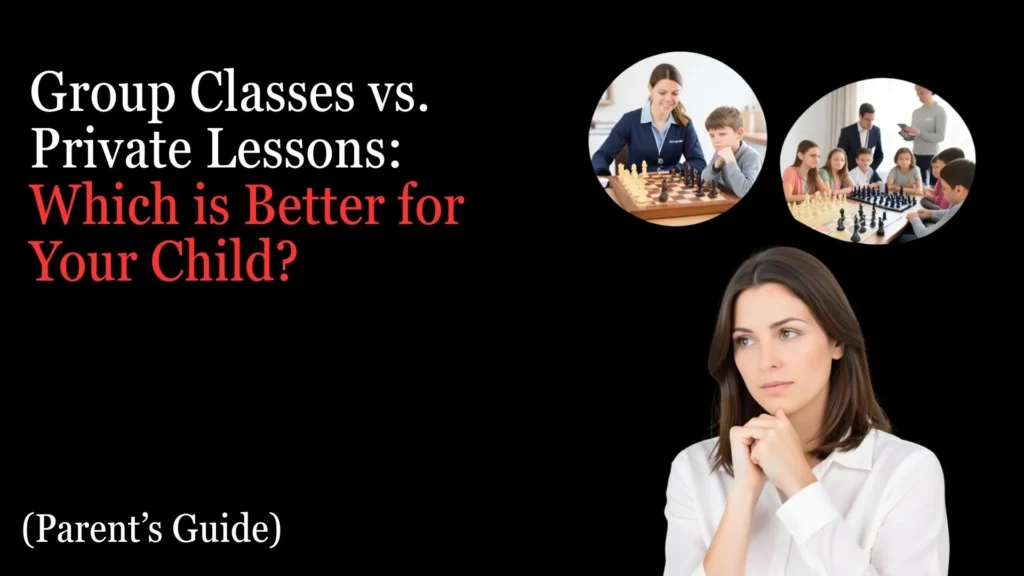
Understanding Group Classes
Group classes, especially structured online chess classes for kids, typically have 4-8 students learning together. Your child sits with peers of similar skill levels, solving puzzles, playing practice games, and learning new concepts as a team. The magic of group learning: When children learn chess together, something wonderful happens. They see their classmates make mistakes and learn from them without the pressure of making those mistakes themselves. Last month, one of my 8-year-old students finally understood pawn structure not from my explanation, but from watching his classmate lose a game because of weak pawns. That peer learning? Priceless. Group classes also build healthy competition. Kids naturally want to keep up with their friends. I’ve watched shy beginners transform into confident players simply because they didn’t want to fall behind their buddy from class. This gentle peer pressure often motivates children more than any parent’s encouragement. Plus, chess is ultimately a social game. Group settings teach children how to win graciously, lose with dignity, and respect opponents—life skills that extend far beyond the 64 squares.The Private Lesson Advantage
Private lessons mean one-on-one attention for the entire session. Every minute is customized to your child’s pace, weaknesses, and learning style. When individual attention makes the difference: I had a student, Arjun, who was brilliant at tactics but froze during games. In group classes, we couldn’t dedicate enough time to his specific anxiety. Through private lessons, we worked on his psychological barriers, developed personalized opening preparation, and practiced time management strategies tailored just for him. Within three months, he won his first tournament. Private lessons allow me to pause and re-explain concepts until they click. There’s no worry about slowing down other students. If your child needs to spend an extra week on knight forks, we spend that time. If they’re breezing through beginner concepts, we accelerate. For children preparing for tournaments or aiming for rapid improvement, private coaching provides the focused intensity needed to level up quickly.So Which Should You Choose?
Here’s my honest guidance based on what I’ve seen work: Choose group classes if your child:- Is a beginner or intermediate player
- Enjoys learning with friends
- Needs motivation from peers
- Benefits from structured, social environments
- You’re exploring whether chess is a long-term interest
- Has specific weaknesses to address
- Is preparing for tournaments
- Learns better one-on-one
- Needs flexible scheduling
- Shows serious commitment to rapid improvement
What Really Matters
Beyond the format, what truly determines your child’s chess growth is consistency and encouragement. Whether group or private, regular practice matters more than intensive cramming. A child attending weekly group classes with enthusiasm will progress further than a child taking private lessons reluctantly. I’ve also learned that the right coach matters more than the format. Look for someone who genuinely enjoys teaching children, celebrates small victories, and makes chess fun. Your child should leave each lesson, group or private more excited about chess than when they arrived. After seven years of coaching, I can tell you this: the “perfect” choice is the one that fits your child’s personality and your family’s situation. Some children bloom in groups, others need individual attention, and many thrive with a mix of both. The beautiful thing about chess? It meets children where they are. Whether they’re learning checkmate patterns alongside classmates or analyzing their games one-on-one with a coach, they’re building critical thinking, patience, and confidence that will serve them for life.Frequently Asked Questions
01. My child is very shy. Will group classes be uncomfortable?
Actually, shy children often flourish in group chess classes because the game itself becomes the conversation starter. They’re not forced to socialize—they connect through shared learning and playing together. I’ve seen many introverted students find their confidence through chess friendships.
02. Are private lessons much more expensive than group classes?
Yes, private lessons typically cost 2-3 times more than group classes because you’re getting dedicated one-on-one time. However, the price varies by location and coach experience. Many families start with group classes and add private lessons later when needed.
03. Can my child switch from group to private or vice versa?
Absolutely! Children’s needs change as they progress. Starting with group classes and transitioning to private lessons for tournament prep is very common. Good coaches support whatever format helps your child grow.
04. How long before I see improvement in my child's chess?
With consistent weekly attendance (either format), most children show noticeable improvement in 2-3 months. They’ll start spotting tactics, playing more confidently, and understanding strategy better. Chess is a marathon, not a sprint!
05. What if my child loses interest after a few classes?
This happens occasionally, and it’s okay. Group classes often help sustain interest longer because of the social element. However, if your child isn’t enjoying chess after giving it a fair try, it’s perfectly fine to explore other activities. Not every child will love chess, and that’s perfectly normal.
Admissions are now open

Coach Rathish offers personalized chess coaching for all levels—kids, teens, and adults. 7+ years of experience, proven student success, and a passion for the game.
Quick Links
Contact
- 110b Bungalow medu METTUPALAYAM COIMBATORE DISTRICT, TAMIL NADU 641301 India
- rathishravi98@gmail.com
- +91-7448408684