
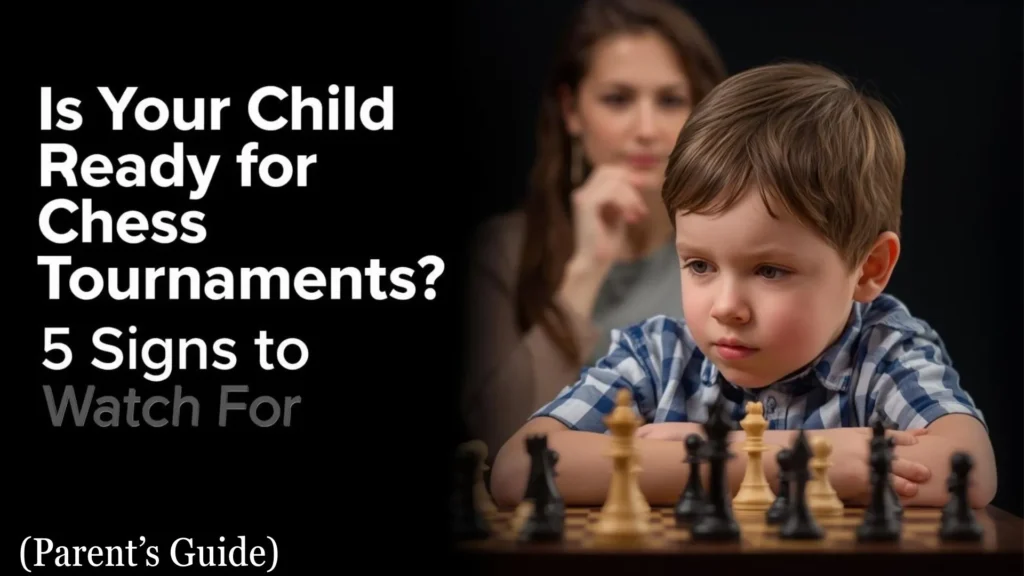
Is Your Child Ready for Chess Tournaments? Signs to Watch For
So your little one has been playing chess for a while now. They’ve beaten you a couple of times (maybe more than you’d like to admit), and suddenly the word “tournament” starts floating around. But how do you actually know if your child is ready?
As a chess coach who has worked with hundreds of kids, I can tell you — this is one of the most common questions I hear from parents. And the good news? You don’t need to be a chess expert yourself to figure it out. You just need to watch for a few simple signs.
Let me walk you through them.
First, What Actually Happens at a Kids Chess Tournament?
Before we talk about readiness, let me quickly paint a picture so you know what we are talking about.
A kids chess tournament is not a scary, pressure-filled room with adults staring at clocks. It is usually a hall full of children the same age as yours, sitting across from each other, playing chess on proper boards, with a coach or arbiter nearby. There are rounds, there are small trophies or certificates, and there is a lot of excitement in the air.
Most kids come home from their first tournament talking about it for days, win or lose.
Signs That Your Child May Be Ready
1. They Know All the Basic Rules Without Needing Reminders
This one is important. If your child knows how every piece moves, understands check and checkmate, knows about castling and en passant, and does not need you or their coach to remind them during a game, that is a solid foundation.
They do not need to be a genius at strategy. They just need to know the rules confidently. Think of it like learning to ride a bicycle. Before you enter a race, you should at least be able to balance without someone holding the seat.
2. They Can Sit and Focus for the Full Duration of a Game
Tournament games for kids usually last anywhere between 15 minutes to an hour depending on the level. If your child can sit through a complete game without getting distracted, losing interest, or wanting to quit midway, that is a very positive sign.
This does not mean they have to be perfectly still. Kids will be kids. But they should be able to stay engaged with the board and think through their moves. Attention span at the board is something that develops gradually, and it is one of the clearest indicators of tournament readiness.
3. They Handle Losing at Home With Maturity
This is one of the biggest things I always tell parents. Losing is a part of chess, especially in tournaments. At a first tournament, your child may win some and lose some. That is completely normal.
If your child can lose a game at home, feel a little disappointed maybe, but still come back to the board and try again, they are showing the kind of emotional maturity that tournaments require. If every single loss leads to a big meltdown, it might be worth spending a little more time building that resilience before entering a competition.
And honestly, the tournament experience itself teaches this better than anything else can. Those mistakes at the board, as uncomfortable as they feel in the moment, are often where the deepest learning happens.
4. They Are Curious and Ask Questions About the Game
When a child starts asking things like “Why did my opponent do that?” or “What should I have done differently?”, it tells you that they are thinking beyond just moving pieces. They are starting to understand chess as a thinking game.
That curiosity is a beautiful sign. It means they are ready to learn from real game situations, which is exactly what tournaments provide.
5. They Have Expressed Interest in Playing Against New People
Some kids naturally get bored playing only against family members or the same classmates. When they start saying things like “I want to play someone I don’t know” or “I want to see how good I really am,” listen to that.
That desire to test themselves is exactly the spirit tournaments are built for.
Signs That It May Be Worth Waiting a Little Longer
Not every child needs to rush into tournaments, and that is perfectly okay. Here are a few signs that a bit more practice time might help.
They still get confused about how certain pieces move, like mixing up the bishop and rook movements. They lose interest in the game midway through, not because they are bored with chess overall, but because they are still getting comfortable with it. They feel very anxious about making mistakes in general, not just in chess. In that case, building confidence in a no-pressure setting first makes a lot of sense.
There is no shame in any of this. Every child has their own pace, and the goal is always to make chess a joyful experience, not a stressful one.
What Parents Can Do to Help Them Get Ready
You do not need to know chess yourself to support your child in this journey. Here are a few simple things that make a big difference.
Play casual games with them at home, even if you are a beginner yourself. Let them teach you. It builds their confidence. Talk to their chess coach regularly and ask honestly whether your child seems tournament-ready. Knowing what to look for in a chess coach can make this conversation more productive, because a good coach will always give you an honest answer rather than a vague one.
Keep the conversation around tournaments light and exciting, not heavy with expectations. Tell them it is an adventure, not a test. And after their first tournament, no matter the result, celebrate the fact that they showed up and tried.
If your child is between 4 and 6 years old and just starting out, a structured programme designed for that age group can be a gentler way to build those foundational skills before stepping into a competitive setting. For children aged 7 to 14 who are already comfortable with the basics, a programme tailored to that stage helps sharpen the thinking skills that tournaments demand.
The First Tournament Is Never About Winning
I want to be very honest with you here. The first chess tournament for a child is rarely about medals or rankings. It is about the experience of sitting across from a stranger, thinking on their own, making decisions under a little bit of pressure, and finishing the game with a handshake.
These are life skills. Patience, focus, handling wins and losses gracefully, and thinking before acting. Chess teaches all of this, and the tournament is just the stage where those lessons come alive.
Conclusion
If your child knows the rules, enjoys the game, and has even once asked about playing against other kids, they are probably more ready than you think. Trust that readiness, talk to their coach, and take the leap.
The worst that can happen is they lose a few games and learn a lot. The best that can happen is they discover a passion that stays with them for life.
And either way, they will come home with stories to tell.
Frequently Asked Questions
01. At what age can a child start playing in chess tournaments?
Most kids can start as early as 5 or 6 years old, especially in beginner-friendly formats. Many online tournaments are specifically designed for young children with shorter time controls and friendly environments.
02. Does my child need to win games regularly before entering a tournament?
Not at all! Tournaments are for learning just as much as winning. Many first-time tournament players lose most of their games and still come back more motivated than ever.
03. Are online chess tournaments safe for kids?
Yes, reputable platforms have moderated environments designed specifically for children. Always ensure the platform is child-friendly and that you’re aware of who they’re interacting with. If you’re looking for a structured, safe place to start, you can explore our upcoming tournaments here.
04. How do I find the right tournament level for my child?
A good chess coach can guide you on this. Most beginner tournaments are clearly categorized by age group and rating level, so your child won’t be thrown in against much stronger players. If you are unsure where to start, the parent guide on choosing the right chess coach covers exactly this kind of decision in practical detail.
05. What if my child gets nervous before a tournament?
That’s completely normal — even adults get nervous! Remind them it’s just a game, that every player started exactly where they are, and that the goal is to have fun and learn. A little nervous energy can actually be a good thing.
Ready to Level Up Your Chess?

Coach Rathish offers personalized chess coaching for all levels—kids, teens, and adults. 15+ years of experience, proven student success, and a passion for the game.
Quick Links
Contact
- 110b Bungalow medu METTUPALAYAM COIMBATORE DISTRICT, TAMIL NADU 641301 India
- rathishravi98@gmail.com
- +91-7448408684