
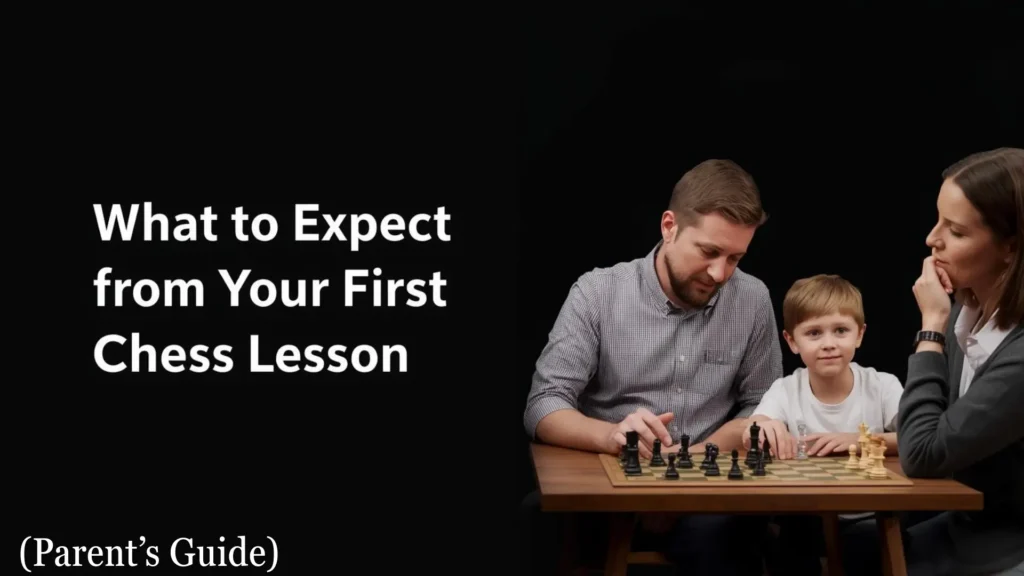
Hello! I’m a chess coach with over 7 years of experience working specifically with children. I’ve taught hundreds of kids & adults in group classes, private sessions, and school programs. Many parents reach out with the same thoughtful questions before enrolling their child: “Will my kid enjoy it?”, “What actually happens in the first lesson?”, “Is it too advanced or too basic?”.
If you’re considering chess classes for your child whether they’re complete beginners who barely know how the pieces move, or they’ve played a few games at home here’s a clear, honest picture of what a typical first lesson looks like in my classes. My goal is always to make the experience fun, confidence-building, and genuinely valuable from day one.
The Warm Welcome (First 5–10 minutes)
We start gently. I greet each child by name (I always learn names beforehand!), ask simple questions like “Have you ever played chess before?” or “Which piece do you like most?” This helps shy kids relax and lets me gauge their current level quickly.
No pressure, no tests just friendly chat while they settle in with their board (physical or digital, depending on online/in-person).
Core of the First Lesson: Fun & Fundamentals
We don’t dive into full games right away. Instead, we build step by step using mini-activities designed for beginners:
Board & Piece Introduction
We review the board (ranks, files, light/dark squares) if needed, but quickly move to pieces.
- Each piece gets its own “spotlight”:
- Pawns walk forward (with their special first move).
- Rooks slide like race cars on straight roads.
- Knights jump in their funny L-shape (kids love this!).
- Bishops stay on their color like loyal friends.
- Queen = rook + bishop (the superstar).
- King = one careful step (the VIP we protect).
- We practice moving each piece individually, no capturing yet.
Mini-Games & Challenges
- This is where the magic happens! We play short, focused games like:
- Pawns-only races to promotion.
- “Knight vs. pieces” capture challenges.
- “Capture the flag” with one piece. These keep energy high and teach movement + basic strategy without overwhelming rules.
First Taste of Capturing & Check
- Toward the end, we introduce safe capturing (“When you take a piece, you replace it!”) and the idea of check (“The king is in danger—help him escape!”). We don’t usually reach checkmate in lesson 1 that comes soon after.
Everything is interactive: kids move pieces, I demonstrate, we cheer small wins. Laughter is common!
Wrap-Up & Fun Takeaways
We end with:
- Quick recap (“What was your favorite piece today?”).
- A simple homework challenge (e.g., “Play 3 pawn games at home”).
- Parents get a short note: what the child did well, next steps. Many kids leave excited and asking “When is the next class?”
Why This Structure Works for Kids
- It builds confidence fast (no one loses a full game on day 1).
- Keeps attention (short bursts, variety, movement).
- Sparks curiosity (“I want to learn how the queen attacks!”).
- Teaches patience, focus, and good sportsmanship gently.
Chess isn’t just about winning, it’s about thinking ahead, solving puzzles, staying calm under pressure, and having fun with friends. These benefits show up even after a few lessons.
If this sounds like the kind of positive, structured start your child would enjoy, I’d love to welcome them to a trial class. Spots fill quickly, and the first session is designed exactly for curious beginners.
Frequently Asked Questions
01. My child is only 6/7—will they understand anything?
Absolutely! We adapt to every age. Younger kids love the knight’s jump and pawn races. We use stories, colors, and lots of visuals with no long explanations.
02. What if my child already knows how pieces move?
Great! We assess quickly and add capturing, check, and simple tactics right away so they feel challenged and progress faster.
03. Do kids play against each other in the first class?
Usually not full games yet, We focus on skill-building mini-games. Real opponent play starts in lesson 2 or 3 when they’re ready and excited.
04. How long is a typical class?
45–60 minutes, depending on age group. Short enough to hold attention, long enough for real learning.
05. What should my child bring?
Nothing! We provide boards/pieces. Just a curious mind and maybe water/snack for after.
06. Is one trial enough to decide?
Most parents see their child’s smile and engagement and know right away. But feel free to try 1–2 sessions no pressure.
Admissions are now open

Coach Rathish offers personalized chess coaching for all levels—kids, teens, and adults. 7+ years of experience, proven student success, and a passion for the game.
Quick Links
Contact
- 110b Bungalow medu METTUPALAYAM COIMBATORE DISTRICT, TAMIL NADU 641301 India
- rathishravi98@gmail.com
- +91-7448408684